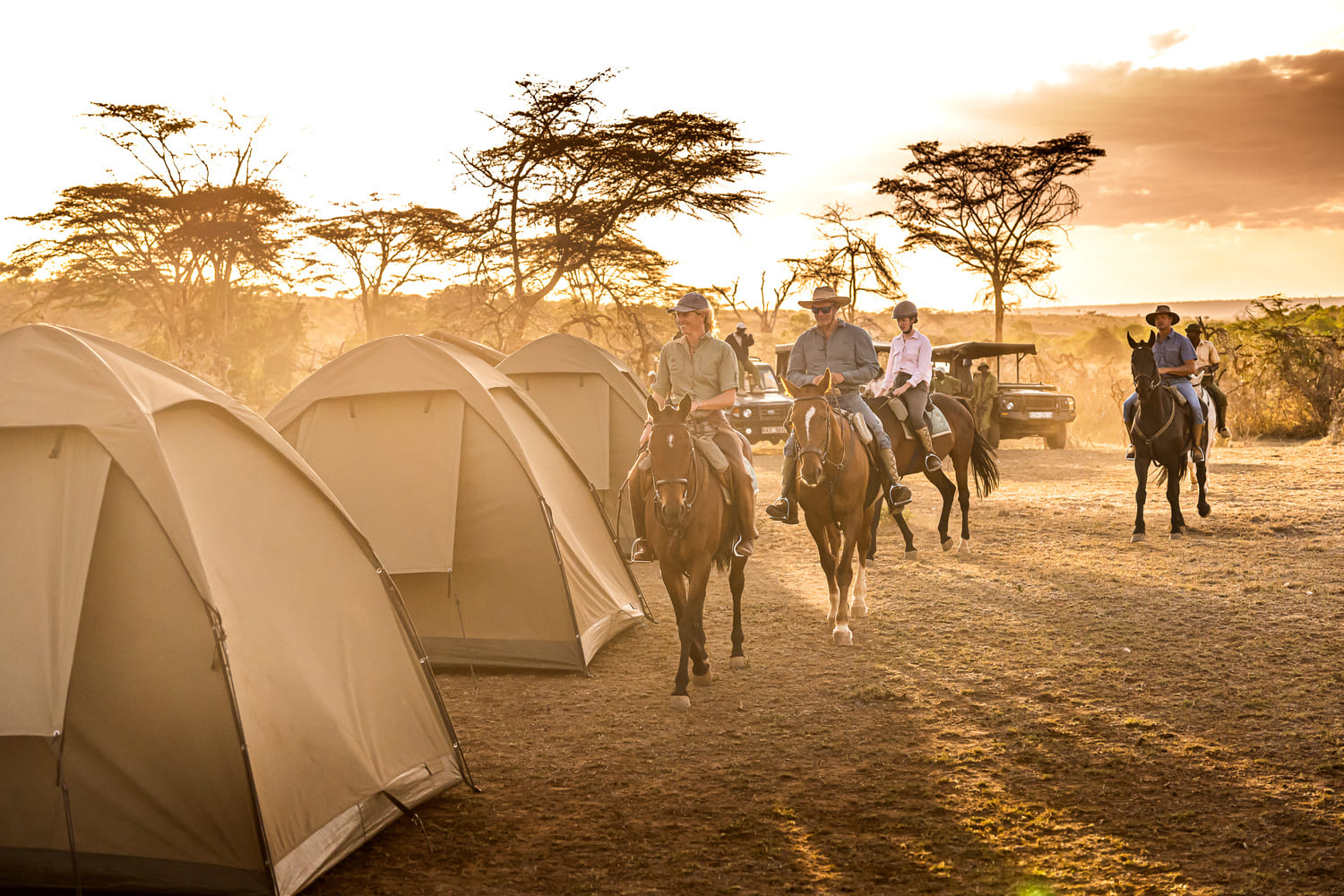
Horseback riding in Laikipia is unlike any safari experience on the continent.
A cantering zebra on the savannah plains, with the half sun peeking through the overcast clouds just over the horizon towards Ethiopia. A rider on the northern slopes of Mount Kenya. Behind, the snow-capped peaks. The bellow of a lion rolls over, with heavy mist in the air and dew on the nearby shrubs.

The Laikipia Plateau stretches across 9,500 square kilometres and, at points, reaches an altitude of 7,000 feet. A region that is a mix of acacia woodlands, kopjes and the open savannah. It is home to over 80 species of large mammals, including half of Kenya’s endangered black rhinos, half of the world’s Grevy’s zebras, and most of the world’s reticulated giraffes. With private conservancies such as Lewa Conservancy, Ol Pejeta Conservancy, Il Ngwesi Conservancy, Loisaba Conservancy, and Borana Conservancy, the Laikipia Plateau demonstrates that wildlife can thrive outside national parks. Through community ownership, tourism here can directly fund conservation outcomes. Even making coexistence between livestock and wildlife a reality.
Why Horseback Riding in Laikipia is Different
Fewer vehicles mean riders move among wildlife rather than watching from behind glass, cantering alongside giraffes, crossing rivers where no vehicle can follow, setting their own pace through terrain that changes daily. These are private, one-on-one safaris. No schedules. No engines..
A Day in the Saddle
Mornings begin before daybreak. Chill in the air, horses saddled in the dark. Trotting past grazing zebra, giraffes chewing the tops of acacia trees, none the wiser. Every morning brings something different. Riders getting close enough to see the steam rising from a black rhino’s nose, or a leopard flat on a solitary branch above.

Midday means lunch already packed in the saddles or laid out by the guides under cedar trees, or on a rocky kopje overlooking the plateau. Evenings end at a fly camp in the bush or back at the lodge. Boots off, sundowners, a chinwag over the firepit. The terrain shifts daily. Open plateau one morning, dense woodland the next.
Where to Ride in Laikipia
Great stays that offer this kind of adventure are:
Offbeat Safaris — A nine-day moving trail starting at Borana, a cattle ranch turned conservation area, with stops at El Karama where riders camp by the El Waso River, through Collachia Hills, and ending at Sosian Lodge. Days spent crossing savannah, mountain ridges, and cedar forest. Nights under canvas. Along the way, riders cross Lolldaiga Hills. A 55,000-acre ranch at the foot of Mount Kenya, described as one of the most beautiful farms in Africa. A serious rider’s adventure.
Sosian Lodge — Lodge-based riding with morning and afternoon rides through plains, rivers, and forest. Those wanting more can fly-camp overnight in the bush. A small tipple under the stars before bed in simple tents, then back to the lodge at dawn. Leopard sightings are possible here.

Ol Malo —An exclusive house and lodge on the banks of the Uaso Nyiro River, set within 5,000 acres of bushland. No schedules. Riders encounter different wildlife daily, and at night, camels carry the mobile camp between snow-peaked mountains and glacier-fed rivers.
Horseback safaris have been part of Laikipia since Tony Church founded the tradition here in 1971. More than fifty years on, riders still leave having ridden alongside Grevy’s zebra, reticulated giraffe, and black rhino, knowing that every conservation fee paid has gone directly toward keeping the Laikipia Plateau as distinctive, raw, and community-driven as it has always been